MEALTIME. MAZZOCCO AND THAT TIME WHICH IS A RIGHT (EVEN IN CYCLING)
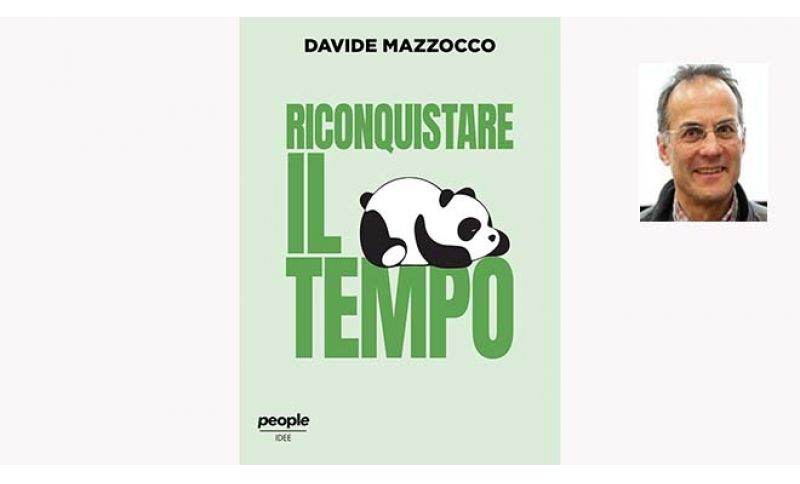
BOOKS | 20/12/2024 | 08:13 di Marco Pastonesi In 1974, Gibì Baronchelli lost the Giro d'Italia (yes, that was a defeat) by 12 seconds (first, needless to say, Eddy Merckx) after 4062 km. Nothing. Yet there have been worse things. In 1989, Laurent Fignon lost the Tour de France (yes, that was a disaster) by 8 seconds (first, Greg LeMond) after 4083 km. Less than nothing. However. In 1946, Fausto Coppi won the Milan-San Remo (the one with the radio announcement "while waiting for other competitors, we'll play dance music") with 14 minutes advantage (second, Lucien Teisseire) after 293 km. Everything. More. Infinite and eternal. Time. In cycling, time and space are decisive elements. In a sprint or by breakaway, in line or against the clock, on the road or on the track. And in photography, where it's impossible to quantify the difference. That nothing that means everything. An imperceptible disparity that marks the border between history and anonymity, happiness and disappointment, success and regret, myth and oblivion. Davide Mazzocco wrote "Reclaiming Time" (People, 138 pages, 15 euros). Time is money, those who have time should not wait for time, time is a tyrant, time is a gentleman, even the wheel of time, even the time of apples, and always "time, corrosion, and decomposition occupy the first page but also fill the rest of the novel" (from "Autumn of the Patriarch" by Gabriel Garcia Marquez). Instead, Mazzocco tries to understand and explain why time is determined by those with power, and obviously that power is economic, between watches and algorithms, between epistles and emails, between Covid and post-Covid. And what changes. And how it changes. The bicycle also has its own temporal dimension. Not so much in cycling, which is the easiest aspect to understand and evaluate, but in everyday life, particularly in the chapter titled "Technology is not the solution". Mazzocco cites a text from over 50 years ago, "In Praise of the Bicycle", in which Ivan Illich emphasized how "studies would allow statistical data on time/kilometer ratio, but would overlook the hidden costs of transportation, namely 'fragments of existence gnawed by traffic, space devoured by vehicles, multiplication of movements made necessary by the presence of vehicles, time lost, directly or indirectly, in locomotion'". Here are the experiences of urban speed limits at 30 per hour, here is the project of everything available and reachable in 5 minutes on foot, here is the myth of speed (and not of goodness or health) even in food. I met Mazzocco on the roads of cycling. He has written (and writes) a lot about cycling. Including books, such as "History of Cycling" (Bradipolibri, 2010) and "Grimpeur" (Bradipolibri, 2012). And I found him again on the roads of the bicycle, last October, at the Slow Cyclist Festival, where time is a decisive element in the nature of the gathering, meetings, appointments, and participants. In Ferrara, Mazzocco spoke about chronophagia, that is, hunger for time; about sleep regression, based on the principle of more-awake-more-consume; about raiders and cycle travelers; about tribal visions. And essentially, he was preaching slowness: "We can traverse the time given to us by following that inner rhythm that is inscribed in our biology much more than society wants us to believe". The inner rhythm is a lower rhythm in time, but superior in quality: "Time is not a luxury. Time is a right".
Per essere una formazione Continental, è decisamente competitivo il roster che la Rotterdam - BEAT CC p/b Saxo sta allestendo settimana dopo settimana in vista della stagione 2027. Dopo le firme di Siebe Deweirdt, Finn Crockett, Mathis Avondts e Jelte Krijnsen,...
La Bardiani-CSF 7 Saber annuncia l'ingaggio di Alexander Hajek per la stagione 2027. Il corridore austriaco, nato a Hainburg an der Donau il 19 luglio 2003, arriva dalla Red Bull–BORA–hansgrohe, formazione WorldTour con cui ha gareggiato nelle ultime tre stagioni....
Jay Vine continuerà a vestire la maglia della UAE Team Emirates-XRG fino al termine della stagione 2029. Il corridore australiano, arrivato nella formazione emiratina nel 2023, ha trovato negli ultimi anni la propria dimensione, affermandosi sia come uomo capace di...
Proseguirà per altri due anni l’avventura di Haoyu Su con l’XDS Astana. Arrivato a inizio 2025 tra le fila del team kazako, il campione cinese su strada (vincitore quest’anno dell’argento nella prova in linea degli Asian Championships oltre al titolo...
Paul Seixas si sta godendo i primi giorni di vacanza e ieri ha concesso un’intervista a RMC nella quale ha seminato dubbi, indizi, sospetti... a cominciare dalle scelte per la prossima stagione agonistica. «Per ora non so a quale grande...
E’ un cavallo da tiro, da salita, da gran premio della montagna. E’ un cavallo da maglia a pois. E’ un cavallo (nella fase di avvicinamento, sui tornanti) a quattro zampe, due gambe e due ruote, ma soltanto (nella fase...
«Ho un problema all'arteria iliaca». Célia Gery ha spiegato così che dovrà mettere in pausa la sua stagione ciclocrossistica per affrontare un intervento chirurgico. La campionessa nazionale francese di specialità, tesserata per la Specialized TMRW, domenica ha conquistato la vittoria...
Le ultime settimane di corsa hanno ribaltato la situazione in testa alla classifica dell'Oscar tuttoBICI Gran Premio System Cars riservato alla categoria Allievi. Il marchigiano Giulio Vitali della Ethica Zero24 Cycling Team ha infatti recuperato terreno e sorpassato il lombardo Matteo Jacopo...
Le lunghe distanze sono nelle vostre corde? Se è così vi farà piacere sapere che Selle Italia ha appena ampliato la famiglia SLR con la nuova SLR Endurance, una sella creata appositamente per chi affronta lunghe distanze su strada. L’ergonomia e le sensazioni in sella...
Intensa giornata quella in programma nella zona del Mugello Circuit a Scarperia domenica 1° Novembre dove la società Virtus VII Miglio di Settimello organizza la sesta edizione del Trofeo Città di Firenze di ciclocross con gare internazionali, nazionali e regionali,...





















 2
2
 2
2

 Ritratti
 Oscar
Oscar Albi d'Oro


Se sei giá nostro utente esegui il login altrimenti registrati.